
For roughly seventy years, from a series of small studios in Ybor City and downtown Tampa, the Burgert family produced what is now widely recognized as the most comprehensive photographic record of any mid-sized American city in the first half of the twentieth century. By the time the studio closed in 1963, more than 80,000 negatives had been numbered, ledgered, and stored, an archive that captured Tampa Bay's transformation from a frontier port village into a modern southern city. Their handwritten signature, Burgert Brothers, looped across the corner of nearly every important photograph made in this region between 1899 and the early 1960s. This is a long-form, fact-checked reference history of the family, the studio, and the collection, drawn from the Tampa-Hillsborough County Public Library's holdings, the State Archives of Florida, the University of South Florida Special Collections, the five-part research narrative published by Tampa local-history site TampaPix, and primary materials assembled across decades by family descendants and Tampa civic historians. We are honored to serve as the licensed photographer authorized to produce prints from the library's archive of negatives, and this post is offered first as a tribute and second as a complete reference for anyone studying, collecting, or simply curious about the Burgerts and their work.
Family origins: from Alsace to Cincinnati
The Burgert photography legacy begins one generation before the camera enters the story. Paul Burgert (born around 1808 in Baden, Germany) emigrated from the Alsace region of France to the United States sometime before 1839, settling in Cincinnati where he made his living as a match manufacturer. Paul's son Samuel Peter Burgert, born around 1839, would become the founding photographer of the family. By 1860, Samuel was working as a paper carrier in Cincinnati while apprenticing in the still-young craft of photography; by 1861 city directories listed him as a "photographist," and by 1866 he had partnered with A.A. Smith to operate as Burgert & Smith, Photographers at the corner of Pike and Madison in Cincinnati. The shop produced portraits, cartes de visite, and the small commercial work that defined urban photography in the years immediately after the Civil War.
Samuel P. Burgert: the itinerant pioneer
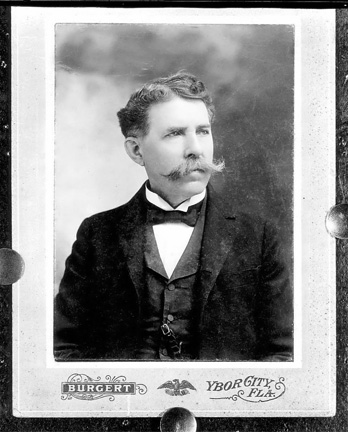
Samuel did not stay in Cincinnati. For long stretches across the 1860s and 1870s, he worked as an itinerant pioneer photographer, traveling Ohio, Kentucky, Indiana, and Missouri with a horse- or mule-drawn wagon and a folding tent he used as a darkroom. He manufactured his own glass plate negatives along the way and made family portraits and individual photographs in towns too small to support a permanent studio. In 1874 he married Adelina Jane Barlow in Louisville, Kentucky, and over the following years they had four sons in Ohio: Willard Chesney (1875), James Harold "Harry" (1876), Walter Scott (1880), and Jean Everett (1882). Around 1882, with a growing family and shifting economic prospects in the Midwest, Samuel began the move that would eventually bring the family to Tampa.
The Florida years begin: Jacksonville, Key West, Savannah
Samuel arrived in Jacksonville sometime between 1882 and 1886. Webb's Jacksonville directories from 1884 through 1888 list him at 71½ Bay Street. Twin sons Alfred Paul ("Al") and Albert John ("Bert") were born in Jacksonville in 1887. Samuel's Jacksonville work survives in the State Archives of Florida and includes portraits of prominent citizens: Emily Grace Tatum Dawkins, the Davis family, and Mrs. Charles Edgar Dyke, Sr., among others. By 1893–1895, Samuel was still listed as a photographer in Jacksonville, and his oldest son, Harry, had already opened what was reportedly Key West's first photography studio around 1896. The family's photographic enterprises spread south and west across Florida in this period; in 1906 several family members operated a Burgert Art Studio in Savannah, Georgia, under Samuel, Harry, Jean, and Nettie Burgert.
Arrival in Tampa and the founding of S.P. Burgert and Son
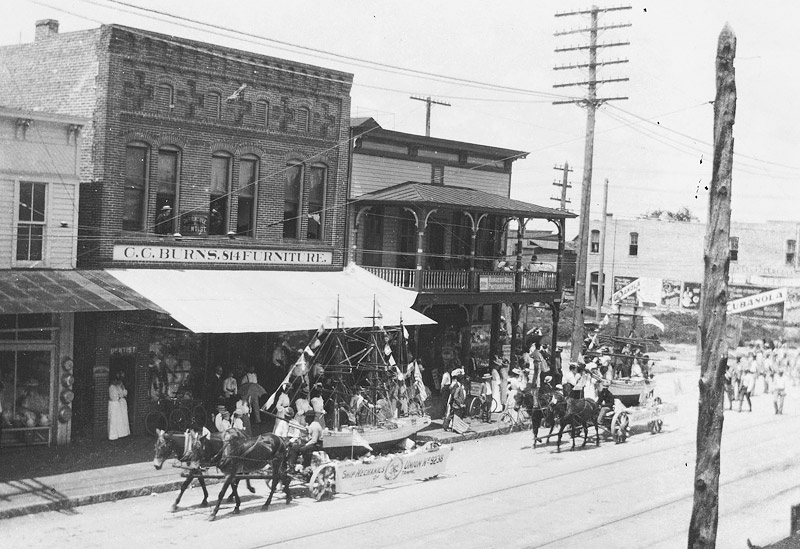
The Burgerts relocated to Tampa around 1896–1897. The 1899 Tampa city directory was the first to document three Burgerts in commercial photography in the city: Samuel, Willard, and Jean. That year, Samuel and Willard opened a studio on Seventh Avenue in Ybor City under the name S.P. Burgert and Son, Photographers. The Tampa they arrived in was still a young city, with a population that had grown rapidly on the strength of Henry B. Plant's railroad and the cigar industry that had relocated from Key West to Ybor City and West Tampa in the 1880s and 1890s. The Tampa Bay Hotel had opened in 1891; Plant Park surrounded it; downtown Franklin Street was beginning its transformation from frontier commercial district into a real urban center. The Burgerts had arrived at exactly the right moment to become the photographers of a city that did not yet know it would need them.
The remarkable sons: parallel ventures across Florida photography
Samuel and Adelina raised six sons, all of whom became involved in photography or related visual industries, several of them building separate businesses that operated alongside the family studio. Willard Chesney Burgert (1875–1941), the eldest, was the most entrepreneurial of the brothers. Born in Cincinnati and brought to Florida as a teenager, Willard founded Tampa Photo and Art Supply Company in 1902 at 207 Lafayette Street (later relocated to 314 Twiggs Street at the corner of Florida Avenue), securing an original Eastman Kodak franchise and becoming the exclusive Kodak distributor for the Tampa region. He expanded the operation to cover motion picture equipment, theater seats and screens, and theatrical supplies. Willard managed the Empire Theatrical Exchange booking office in Havana in 1908, represented Pathé newsreels and Mutual Weekly Film, booked vaudeville acts including the famous Dolly Sisters, and managed a string of theaters across Florida, including the Sans Souci, Pathe, and Orpheum in Tampa and the San Carlos in Key West. He was described by those who knew him as "flamboyant," a "bon vivant," and a legendary long-distance swimmer who once defeated competitor Emil Fritch in a five-mile race in the Gulf of Mexico off Clearwater Beach, taking home a silver cup and a $1,000 prize. He died in 1941 at age 66, by then practically destitute, and was buried at Woodlawn Cemetery in Tampa.
James Harold "Harry" Burgert (1876–1914), described by family and contemporaries as "one of the most promising" of the brothers, opened Tampa's first photography studio in Key West around 1896 and established the San Carlos, Key West's first vaudeville and motion picture house. He hand-tinted motion picture film, becoming, by one account, "the first entrepreneur in south Florida to show color films." He photographed flag-raising ceremonies in Cuba in 1898 for Leslie's Weekly during the Spanish-American War, managed theaters in partnership with Willard, and operated as an itinerant photographer traveling to Texas, Oklahoma, and the Carolinas with his own young family. Harry died suddenly of a heart attack on January 22, 1914, at age 37, leaving his wife Nettie and two young sons with a third child on the way.
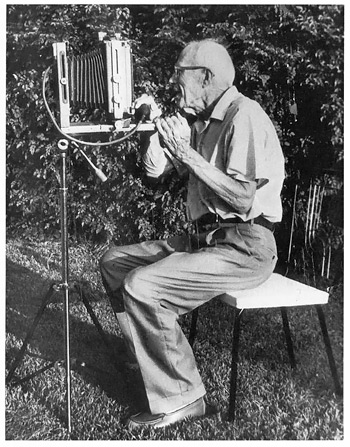
Jean Everett Burgert (1882–1968) was the technician of the family. Born December 31, 1882, in Cincinnati, Jean came to Tampa during the mid-1890s and worked as a Tampa Tribune paperboy. He worked as department manager at Tampa Photo and Art Supply and developed the deep technical photographic knowledge that would later distinguish the family studio. Those who worked with him described him as "a quiet, retiring person," a self-identified loner who specialized in darkroom work and technical innovations and who taught his brother Al fundamental photography skills. He died in 1968 in a trailer park near Largo, Florida. 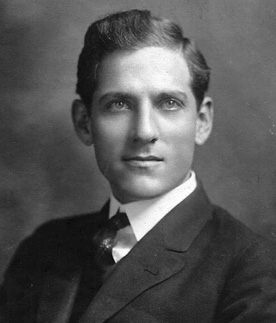
Alfred Paul "Al" Burgert (1887–1956), the twin, was the family's public-facing businessman. Born April 1, 1887, in Jacksonville Beach, Al received business school training and worked as a bookkeeper for his older brother Willard at Tampa Photo Supply before joining Jean in commercial photography. Contemporaries universally praised his character; friend Ed Warner remembered him as "one of the grandest guys who ever lived." Al was active in the John Darling Lodge No. 154 (Master in 1914), the Florida Photographers Association (past president), the Tampa Advertising Club, the Scottish Rite, the Tampa Gyro Club, and various Shrine organizations. He died of lung carcinoma on January 5, 1956, at his Tacon Street home in Tampa.
1917: the founding of Burgert Bros., Inc.
In 1917, Al and Jean Burgert acquired the existing commercial photography business of William A. Fishbaugh, their primary local competitor, and formally established Burgert Bros., Inc.. Al served as president; Jean served as vice president and treasurer. The acquisition was strategic; it eliminated their main competition and positioned them as Tampa's premier commercial photography firm. Samuel, the family patriarch, died on September 29, 1918, during the global influenza epidemic. He is buried at Woodlawn Cemetery in Tampa. The Burgert Brothers commercial era, the period that produced almost all of the iconic images people associate with the studio today, was carried entirely by Samuel's sons after his death.
The Seventh Avenue studio in Ybor City
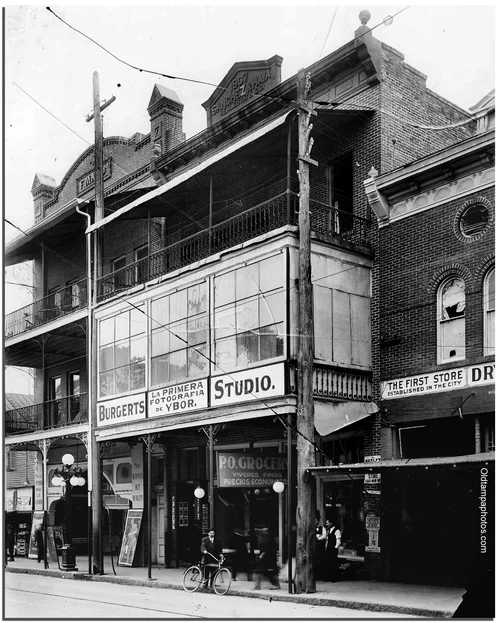
The primary studio operated at 1515 Seventh Avenue in Ybor City, on the second floor of the Sanchez & Haya Real Estate Building, above a grocery store. The studio's defining architectural feature was an "all glass" northern-facing frontage roughly forty feet long, which flooded the workspace with the soft, indirect natural light prized by portrait photographers in the era before reliable electric studio lighting. The brothers later operated a downtown commercial office at 407 East Lafayette Street (now Kennedy Boulevard), with display cases facing the sidewalk that showcased recent work and signs advertising commercial photography services. The downtown office was where Al managed client relationships and outside assignments; Ybor City remained the technical heart of the operation.

The studio hired skilled photographers as it grew, including Roscoe Frey (joining in 1919 at fifteen dollars a week) and Al Severson (joining in 1924, later co-owner). The typical workday began with the brothers collecting multiple orders each morning and dispatching photographers to assignments across the city: real estate agents needing property documentation, contractors needing progress shots, department stores needing window display work, newspapers needing event coverage, civic organizations needing portrait sittings. Frey later observed of the brothers' division of labor: "Al did practically all the outside work. He was the contact man, and Jean did the finishing inside." The combination, Al's social skill and Jean's technical care, produced the consistent visual signature that defined Burgert work.
The Tampa they documented
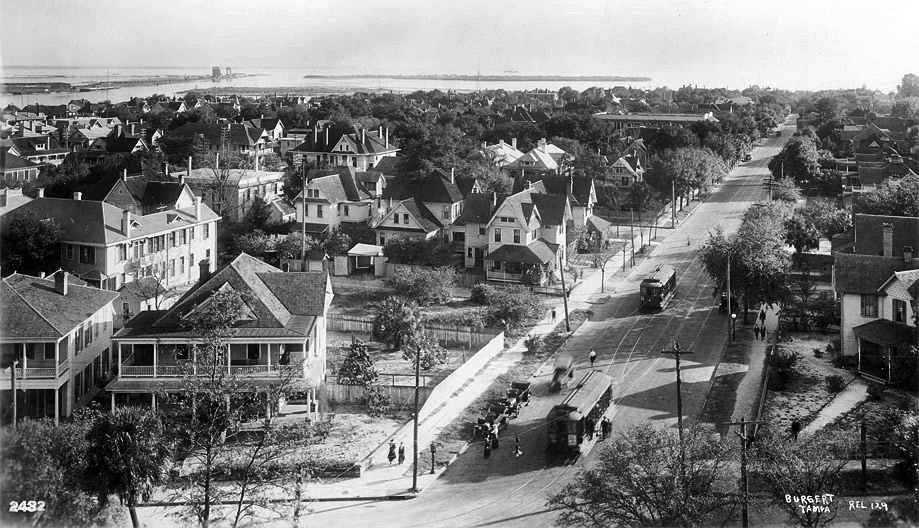
For more than four decades, the Burgerts photographed Tampa Bay's transformation. Ybor City's cigar industry at its peak, the vapor rising from the brick factories along Seventh Avenue, the cigar makers at their benches, the company picnics and Labor Day parades. The grand Tampa Bay Hotel, designed by John A. Wood for Henry Plant, before and after its conversion to the University of Tampa in 1933. Plant Park and Hillsborough River scenes. Gasparilla parades through downtown. The quiet streets of Hyde Park and Seminole Heights, captured by the same photographers who documented the city's most public moments. Davis Islands rising from the bay during the 1920s Florida boom, with Al creating a celebrated promotional photograph featuring a romanticized moonrise composited with the architect's renderings. The studio's commercial client list was extraordinary in its breadth: Stone & Webster (the predecessor of Tampa Electric Company), King Edward Cigar Company, Borden's Dairy, International Truck Company, Florida Motor Lines, Mallory Shipbuilders, Atlantic Coast Line Railroad, Cuesta Rey Cigarmakers, Maas Brothers, O. Falk's, and Wolf Brothers. The work extended beyond Tampa as well, with assignments in Tallahassee, Jacksonville, the Florida Keys, Alabama, and Louisiana.
Decisive moments: Jannus, the 1921 hurricane, Davis Islands
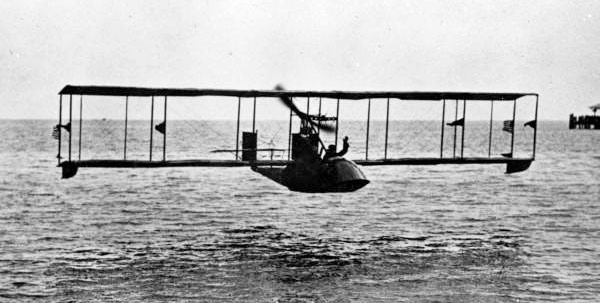
Three sequences stand out among the studio's historical photography work. On January 1, 1914, the Burgerts photographed Tony Jannus's St. Petersburg-Tampa Airboat Line flight, the world's first scheduled commercial airline flight, as it landed in Tampa. The images remain the foundational visual record of the moment commercial aviation began.
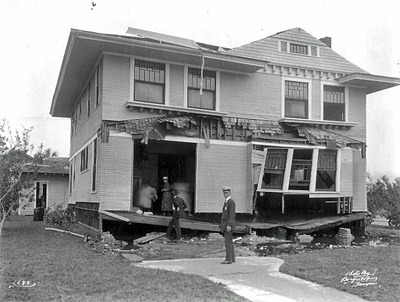
On October 25, 1921, when one of the most destructive hurricanes of the early twentieth century struck Tampa Bay, Jean Burgert and assistant Roscoe Frey braved severe winds along the bayfront to document the damage to seawalls, railroad infrastructure, and homes. They processed their negatives overnight by candlelight, with electrical service knocked out across the city. Notably, Al Burgert chose to withhold the most dramatic images from national syndication, telling Frey he believed "sensationalized publicity would be bad for Tampa." Only a limited set was released locally. The decision is a small but real example of the brothers' relationship with the city; they were not merely visual chroniclers, they were civic actors who understood that the images they distributed shaped how the rest of the country thought about their home.
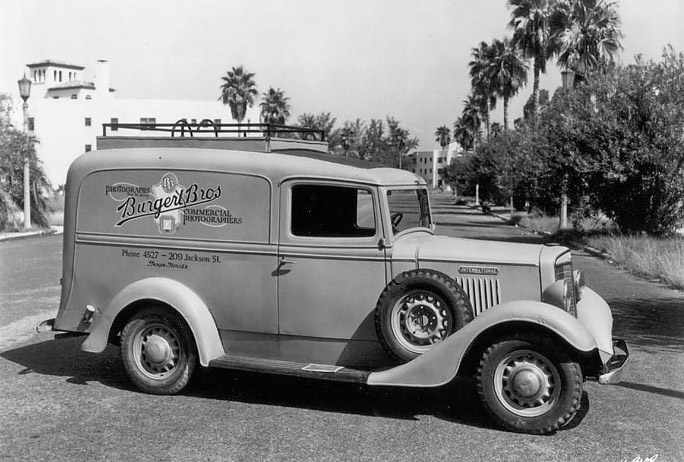
Through the 1920s Florida boom and bust, the Burgerts extensively documented Davis Islands as it rose from filled-in mud flats off downtown Tampa, the construction of new neighborhoods across the city, and the architectural ambitions of developers who came and, often, went. The visual record they preserved of this decade is one of the most complete photographic chronicles of any American real estate boom of the period.
National recognition: Life magazine and Gargantua
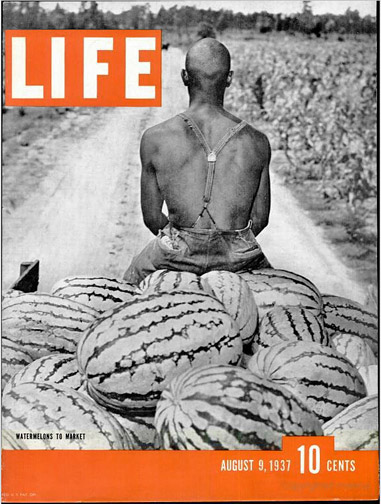
Beginning in 1935, the Burgerts served as Southern correspondents for Life magazine. Al's photographs appeared in Life across multiple issues from 1937 to 1943, with his best-known credit being the "Fifty Million Watermelons go to Market" cover image of August 9, 1937, photographed in central Florida and reproduced on millions of magazine covers across the country. 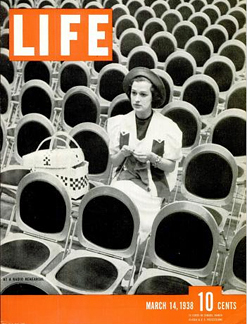
His most celebrated single assignment, however, came in March 1938 when he photographed Ringling Brothers' temperamental gorilla, Gargantua, in Sarasota. Gargantua had a reputation for throwing metal objects at photographers and trainers; Al approached the assignment in a football helmet, face mask, and chest protector, and produced the images Life eventually used. The studio's work also appeared in National Geographic and in countless local publications. A 1943 pencil sketch produced as a joke by friends noted that Al had created "over fifty picture stories for N.Y. LIFE, including Honeymoon Island and Gargantua's Courtship."
Technical hallmarks: the Cirkut camera, glass plates, the signature
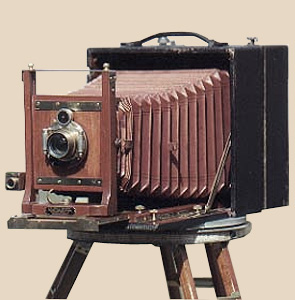
The Burgert Brothers became known for several distinguishing technical features. The first was their mastery of the Cirkut camera, a large-format rotating camera made by Eastman Kodak that produced exceptionally wide panoramic negatives by spinning the camera horizontally during a single long exposure. The Cirkut was unforgiving and expensive to operate, and few photographers in the region used it well; the Burgerts used it constantly, producing the wide downtown views, group portraits, parade panoramas, and skyline images that would be impossible to reproduce by any other means. 
The second was the handwritten "Burgert Brothers" signature that appeared in looping cursive at the bottom right corner of nearly every print the studio produced. The signature became, in Tampa civic memory, a kind of seal of authenticity, a hallmark of photographic excellence. The third was an in-house standard for clarity that contemporaries described as "so sharp you could see every detail." The brothers used glass plate negatives well past the period when most studios had switched to cellulose acetate, partly because the dimensional stability of glass produced demonstrably sharper enlargements, and partly because Jean preferred the materials he had trained on. Negatives were systematically numbered and recorded in ledgers with dates and descriptive subject matter, a practice that, in hindsight, made the archive's later cataloging possible at all.
Income, life, and the studio at its peak
During the 1920s Florida boom, Al's annual income approached $100,000, an extraordinary sum for the era. He purchased a home in Palma Ceia adjacent to a golf course, where errant golf balls required a reinforced dining room window. He collected automobiles, two Franklin air-cooled models, a Hupmobile Eight, and a Packard. The Depression, surprisingly, failed to diminish the studio's prosperity; commercial photography in Tampa retained enough demand through the 1930s, and the Life magazine work that began in 1935 added a national revenue stream that carried the studio through the decade. By the early 1940s the studio was thriving on a mix of long-running corporate accounts, civic work, news assignments, and editorial photography.
The end of the studio (1942–1963)
In 1942, Jean Burgert sold his interest in the business to Al in order to pursue motion picture interests, real estate speculation, and educational film projection demonstrations. He spent time in California, married twice, and lived out his later years quietly. Around 1945, Al, aging and physically fatigued from decades of demanding location work, sold the operation for $12,000 to his nephew Thel Burgert (Harry Burgert's son) and longtime employee Al Severson. The business continued operating under the Burgert Brothers name, with Severson at the head, until 1963, when Severson retired and the studio closed.
Thel Burgert went on to a distinguished career of his own in press photography, photographing Babe Ruth, Henry Ford, President Calvin Coolidge, and Thomas Edison, the last Florida photograph of Edison made on February 11, 1931. His older brother Harold "Hal" Burgert worked thirty-six years for the Detroit News (1929–1965). The Burgert family produced working photographers across three full generations.
The collection's perilous journey to the library
The story of how the Burgert negatives reached the Tampa-Hillsborough County Public Library is one of the most consequential preservation rescues in the history of American regional photography, and it nearly went the other way. After the studio closed in 1963, Al Severson retained control of the facilities, equipment, and the extensive negative collection. Historian Tony Pizzo, the dean of Ybor City civic memory, purchased roughly one hundred negatives documenting Ybor City around this same period. By 1965, the bulk of the remaining negatives had been acquired by Carlton Trimble, a Tampa businessman. Allen Morris, curator at the state photographic archives in Tallahassee, learned of the collection and purchased roughly 500 negatives at three dollars each for the State Archives of Florida.
In 1967, Trimble was convicted of producing obscene materials, and the negatives, still in his possession, passed to Henry Cox, president of Tampa Photo Supply, in the dispersal of his assets. The decisive intervention came from local historian Hampton Dunn, who recognized the archive's historical significance and partnered with Raymond E. Bunch to convince Cox to part with the collection for $2,000. In 1974, with that sale completed, the Tampa-Hillsborough County Public Library purchased the collection, along with the fourteen handwritten ledgers that catalog the negatives by number, date, and subject. The library acquired what is now estimated to be the surviving 70,000+ negatives of the original 80,000+ produced over the studio's lifetime.
Preservation and digitization at the Tampa Library
Many of the negatives had suffered damage from decades of heat, humidity, and rain in the various private storage conditions they passed through between 1963 and 1974. The library faced a serious preservation problem. Two grants from the National Historic Publications and Records Commission in 1988 and 1992, supplemented by library funding, made possible the transfer of fragile nitrate and cellulose acetate film onto modern safety stock. The Frank E. Duckwall Foundation subsequently funded the multi-year scanning project that produced the digital archive accessible to the public today. Over 20,000 images have now been digitized and indexed, with the originals stored in a climate-controlled vault at the John F. Germany Public Library in downtown Tampa, where they remain available for direct research access by appointment. We have a personal connection to that preservation work: Bob Baggett, whose own career began in black-and-white film and darkroom processing, advised library staff on the proper archival housing of the original negatives — the climate- and humidity-controlled conditions that give fragile film its best chance of surviving for generations.
Where the photographs live today
Anyone searching for vintage Tampa photographs, historic Tampa Bay images, or original Burgert Brothers Tampa photos will find that the Tampa-Hillsborough County Public Library remains the home of the primary archive, and the single largest source of historic photographs of Tampa Bay from the 1900s anywhere. Additional Burgert imagery is held by the University of South Florida Digital Collections, the State Archives of Florida's "Florida Memory" project, and the University of Florida Digital Collections, in each case representing portions of the collection acquired separately or copied for institutional research access. For genealogy researchers, civic historians, students, journalists, families with multi-generation Tampa roots, and anyone interested in the visual history of Florida's Gulf Coast, the collection is searchable online and the library's reference staff is available for research support. José Ramón Sanfeliz, the Cuban-born cigar maker and amateur photographer who supplied photographs to S.P. Burgert's studio between 1897 and 1905, also has a separate thirty-five-photograph album housed at the University of South Florida Special Collections Library, a small but valuable adjunct to the Burgert archive that documents Ybor City life in its earliest years.
Owning a piece of the archive
Bob Baggett Photography is the licensed photographer authorized by the Tampa-Hillsborough County Public Library to produce prints from the Burgert Brothers Collection. Every print we ship is produced from the original archival negative or its highest-resolution preservation scan, with the full cooperation and authorization of the library that holds the collection. The collection is searchable directly on our historic Tampa photos page, where you can browse by subject, neighborhood, era, business name, person, or street; choose a print size from 8" × 10" up to 48" × 48", with custom and wall-size options on request; and place the order through our contact page. For residential, commercial, and institutional installations, including multi-print sequences and oversized lobby work, contact us directly to talk through the project.
The studio's role in this work is, fundamentally, custodial. The photographs belong to Tampa; our job is to make them physically present, on real archival paper, in the homes and offices and civic spaces where they continue to do the work the Burgerts started.
Further reading and primary sources
For readers who want to go deeper, the most comprehensive narrative account of the family and the studio is the five-part series published by TampaPix, drawing on the Tampa Historical Society, the academic record, and contributions from Burgert family descendants. The library's own Burgert Brothers Collection portal provides direct access to the searchable digital archive and to research assistance. The State Archives of Florida holds Burgert work from both Samuel's Jacksonville years and the Tampa studio's later output. The University of South Florida Digital Collections holds significant additional Burgert imagery and the Sanfeliz album. For families researching their own connections to specific Burgert photographs, the library's reference desk can often locate ledger entries that identify the original commission, date, and subject, an invaluable resource for anyone trying to confirm a family story against the historical record.
Ready to find your photo?
If you have a connection to a specific Tampa neighborhood, business, or family in the Burgert era, the chances are very good that the archive has a photograph of it. Browse the full archive on our historic Tampa photos page, or contact Bob directly to talk through a residential, commercial, or institutional print project. After 45+ years working with the collection, no Burgert print project is too small or too large to talk about.